
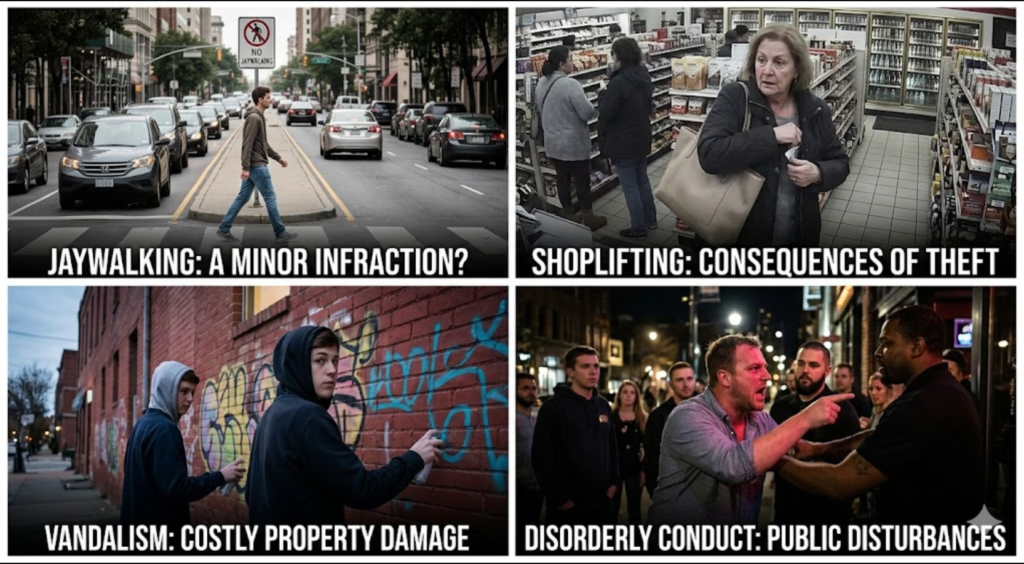
Misdemeanor Examples lurk around every corner—often overlooked yet surprisingly prevalent. From harmless-seeming public disturbances to more serious crimes like shoplifting, these acts may carry legal consequences that are anything but trivial. Join us as we delve into real-life examples of common misdemeanours and break down their implications with clarity and insight. You’ll learn not only what constitutes a misdemeanour but also how a single moment can turn an average day into a run-in with the law! Buckle up for an eye-opening journey through everyday infractions that might make you rethink your next stroll or shopping spree!
Introduction to misdemeanor examples and their Classification
Misdemeanors often fly under the radar, but they can have a significant impact on individuals’ lives. While many people might think of serious crimes when discussing legal issues, misdemeanors encompass a wide range of offences that are more common than you might expect. From seemingly harmless activities like jaywalking to more serious violations such as shoplifting, these actions can lead to unexpected consequences.
Understanding misdemeanors is crucial for anyone wishing to navigate the complexities of law and personal responsibility. Whether you’re curious about how certain behaviours are classified or looking for real-life examples that illustrate these offences, this blog post will guide you through various misdemeanor examples. Get ready to explore what makes these acts misdemeanors and how they affect everyday life!
Understanding the Difference between Infractions, Misdemeanor, and Felonies

When navigating the legal landscape, it’s essential to understand how crimes are categorised. Infractions, misdemeanors, and felonies each represent different levels of offence.
Infractions are the least serious. Think of them as minor violations like traffic tickets or failing to wear a seatbelt. Usually, they come with fines and don’t carry jail time.
Misdemeanors sit in the middle tier. They encompass offences that can result in up to 1 year in jail or significant fines. Examples include petty theft or simple assault. Severity can vary depending on circumstances.
Felonies represent the most serious crimes, such as murder or armed robbery. Convictions often result in lengthy prison sentences and severe penalties beyond just financial repercussions.
Recognising these distinctions helps individuals grasp potential consequences for actions that may seem trivial at first glance.
Real-Life Examples of Misdemeanor examples :

Misdemeanors are often seen as minor infractions, but they can have significant consequences. Let’s explore a few real-life examples.
Jaywalking might seem trivial, yet it’s considered a misdemeanor in many areas. Crossing streets outside designated crosswalks endangers both pedestrians and drivers.
Shoplifting is another common offence that varies in severity. Taking merchandise without paying can escalate from a simple item to larger thefts, impacting the charge level.
Driving under the influence (DUI) or driving while intoxicated (DWI) poses serious risks on the road. This crime carries harsh penalties, including fines and potential jail time.
Vandalism involves intentionally damaging property, ranging from graffiti to breaking windows. The intention behind these actions determines the legal repercussions.
Disorderly conduct encompasses various behaviours disrupting public peace—think loud arguments or public intoxication. Each case is unique and is judged accordingly under local laws.
– Jaywalking: What is it and why is it a misdemeanor?

Jaywalking is the act of crossing a street outside designated crosswalks or against traffic signals. It may seem trivial, but it poses significant risks. Pedestrians can endanger themselves and drivers alike.
Many jurisdictions classify jaywalking as a misdemeanor because it can cause accidents. The law aims to maintain road order and ensure that both pedestrians and vehicles navigate safely.
The penalties can vary widely depending on local laws. Fines are common, and repeated offences might lead to more severe consequences.
While some view it as an innocent infraction, lawmakers recognise the need for regulations to prevent chaos in busy urban environments. Understanding this classification helps us appreciate why even minor violations matter in maintaining public safety.
– Shoplifting: How does the severity of the crime affect its classification?

Shoplifting is often perceived as a petty crime, but its classification can vary dramatically based on several factors. For starters, the value of the stolen merchandise is crucial. Many jurisdictions categorise thefts under a specific dollar amount as misdemeanours, while amounts above that threshold may escalate the charge to a felony.
The circumstances surrounding the act also matter. If someone uses force or threats during a shoplifting incident, it could lead to more severe charges regardless of the item’s value. Additionally, prior convictions may influence how an offence is legally assessed.
Local laws differ significantly, too; what’s considered minor in one state might carry harsher penalties elsewhere. Understanding these nuances helps explain why two individuals caught for similar acts can face vastly different consequences depending on their situation and location.
DUI/DWI: Exploring the consequences and penalties of drinking and driving.

Driving under the influence (DUI) or driving while intoxicated (DWI) is a serious offence that carries severe consequences. The laws vary by state, but most jurisdictions treat these actions as misdemeanors under certain conditions.
First-time offenders often face hefty fines and may be required to attend alcohol education programmes. However, that’s just the beginning. License suspensions can disrupt daily life, affecting work and personal commitments.
Repeat offences escalate penalties significantly. Jail time becomes a real possibility for multiple DUI convictions, even if they start as misdemeanors.
Moreover, having a DUI on your record can lead to higher insurance rates and difficulties securing employment in some fields. Employers frequently conduct background checks; this blemish on an otherwise clean slate can significantly narrow job prospects.
Understanding the ramifications of DUI/DWI is crucial for making informed decisions about drinking and driving.
– Vandalism: Understanding the laws surrounding property damage.

Vandalism refers to the intentional destruction or defacement of someone else’s property. This crime can take many forms, from graffiti on public walls to breaking windows.
The laws surrounding vandalism vary by state. In most cases, the severity depends on the damage caused and whether it involved public or private property. Tagging a wall might be considered a misdemeanor, while smashing storefront glass could elevate charges.
Penalties for vandalism often include fines and community service. Some offenders may even face jail time, especially if their actions are deemed particularly egregious.
Victims of vandalism have rights too. They can seek restitution for damages incurred through civil lawsuits against the perpetrator. Understanding these dynamics is crucial for both potential offenders and victims in navigating legal consequences effectively.
– Disorderly Conduct: What constitutes disorderly conduct, and how is it punished?

Disorderly conduct is a broad term that encompasses various behaviors considered disruptive or alarming to the public. This can include actions such as fighting, making unreasonable noise, or using offensive language in public spaces.
In many jurisdictions, disorderly conduct is classified as a misdemeanor. The specific definitions and penalties can vary by state. For instance, some areas may define it more narrowly than others.
The consequences often depend on the severity of the behavior and whether it’s a repeat offense. Punishments might include fines, community service, or even short jail time in certain cases.
Individuals charged with disorderly conduct may also face civil repercussions beyond legal penalties, such as strained relationships within their communities. Understanding local laws is crucial for anyone seeking to avoid potential pitfalls associated with this misdemeanor category.
The Impact of a Misdemeanor Conviction:

A misdemeanor conviction can have far-reaching effects on a person’s life. Legally, it may lead to fines, community service, or even short-term jail time. These penalties vary significantly depending on the crime and jurisdiction.
Employment opportunities often shrink after such a conviction. Many employers conduct background checks and may view misdemeanors unfavorably. This can limit job prospects in competitive fields.
Housing options also become more complicated. Landlords frequently check criminal records before renting out properties. A misdemeanor could result in rejection from potential homes.
Social stigma is another aspect that can weigh heavily on individuals with a misdemeanor record. It may affect relationships and social circles as people might judge based solely on past actions rather than current character. Understanding these implications is crucial for anyone facing a misdemeanor charge.
– Legal Consequences
A misdemeanor conviction can lead to various legal consequences that significantly affect one’s life. Typically, a misdemeanor is punishable by fines or up to one year of incarceration. The severity often depends on the nature of the crime.
Individuals may face probation, community service, or mandatory counselling as part of their sentence. These penalties are designed not just for punishment but also for rehabilitation.
Additionally, misdemeanors can result in a criminal record. This documentation may pose challenges in different aspects of life, from employment to travel restrictions.
Moreover, some jurisdictions have specific laws that enhance penalties for repeat offenders. Thus, even minor offences can escalate into more severe consequences over time if left unaddressed. Understanding these potential outcomes is crucial for anyone facing such charges.
– Employment Opportunities
A misdemeanor conviction can significantly impact employment opportunities. Many employers conduct background checks, which may reveal past offences. This can deter them from hiring someone with a criminal record.
Certain industries are particularly cautious. Jobs in finance, education, and healthcare often require clean records due to trust and safety concerns.
Behaviour However, not all hope is lost for those with misdemeanors on their record. Some states have programmes that allow individuals to expunge or seal certain convictions after a period of good behaviour.
Misdemeanour. Networking and personal recommendations also play a crucial role in overcoming stigma. Building strong connections within your field can sometimes outweigh the negative perceptions associated with a misdemeanor.
Additionally, focusing on skills development and gaining relevant experience through internships or volunteering can enhance employability despite past mistakes.
– Housing Option
Having a misdemeanor on your record can significantly impact your housing options. Landlords often conduct background checks, and a conviction may raise red flags.
Many property management companies have strict policies against renting to individuals with any criminal history. This can drastically limit your choices, especially in competitive rental markets.
Some landlords might be open to negotiation or willing to consider mitigating factors. Providing references and demonstrating stable income could help sway their decision.
However misdemeanors: May need to explore alternative housing solutions. Consider renting from private landlords, who are less likely to run extensive background checks than larger apartment complexes.
Additionally, offences. Some organisations work specifically with individuals facing barriers due to past convictions. They may help find suitable housing opportunities that don’t discriminate against individuals with offences. es. with offences. offences.
Ways to
Misdemeanours: Understanding Misdemeanor Examples are crucial for anyone navigating the legal landscape. Whether it’s a minor infraction like jaywalking or something more serious like shoplifting, knowing your rights and responsibilities can help you make informed decisions.
Working legal representation is key if you face offences or misdemeanour charges. Consulting with a criminal law attorney can provide clarity on your situation and potential outcomes. They can guide you through the complexities of the legal system, helping minimise penalties or, where possible, work towards dismissals.
Being about and familiarising yourself and educating yourself about local laws also plays a significant role. Each state has its own definitions and consequences associated with misdemeanours. Familiarising yourself with these specifics will better equip you to avoid trouble.
Misdemeanour, If you’ve been convicted of a misdemeanour, understanding how it affects your life moving forward is essential. Seek out resources that assist individuals with past convictions in finding jobs or securing housing options.
Misdemeanours: Staying informed about changes in legislation regarding misdemeanours ensures you’re always prepared should situations arise unexpectedly, keeping both your personal safety and freedom intact as priorities in everyday life.