

Ever wondered what makes the internet tick? Behind every seamless online experience, from streaming your favourite show to making that last-minute order for dinner, lies a complex web of processes and technologies held together by skilled developers. Welcome to the world of DevOps—a dynamic blend of development and operations that powers our digital lives in ways you might never have imagined. In this blog post, we’re diving deep into how Droven.io’s comprehensive tutorials can unlock the secrets behind this fascinating realm. Get ready to unravel the ‘behind-the-scenes’ magic that keeps everything running smoothly and discover how you can harness these skills to elevate your own tech journey! Whether you’re a complete newcomer or looking to sharpen your existing knowledge, there’s something here for everyone eager to explore what truly makes today’s technology tick. Let’s embark on this exciting adventure together!
Introduction: The importance of understanding the
Introduction: The Importance of Understanding the Behind-the-Scenes Magic of DevOps Tutorials
In today’s fast-paced digital world, technology is constantly evolving, and businesses are increasingly reliant on online platforms to drive their success. One key aspect of maintaining a successful online presence is implementing a robust DevOps framework. But what is DevOps, exactly? And why is it so crucial for businesses to not only implement but also understand its inner workings?
In simple terms, Droven io DevOps Tutorials is a combination of development (Dev) and operations (Ops) that emphasises collaboration, communication, and integration between software developers and IT operations professionals. This approach enables faster, more efficient delivery of software products, ensuring that end users receive high-performance applications in a timely manner.
However, understanding the concepts and principles of DevOps can be daunting for those unfamiliar with the technical jargon and processes involved. This is where Droven.io’s DevOps tutorials come into play – unlocking the mystery behind the ‘behind-the-scenes’ magic and making it accessible to all.
By providing step-by-step guides on Droven.io DevOps Tutorials topics such as automation,
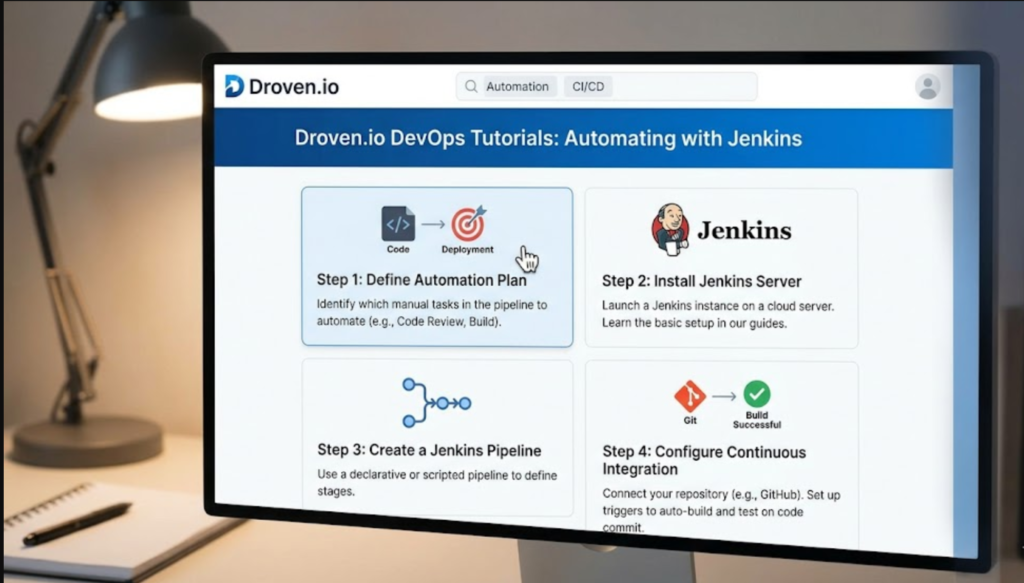
continuous integration/delivery, containerisation, and cloud deployment strategies, Droven.io equips individuals with the knowledge to successfully implement these practices in their own business or organisation.
Not only does understanding Droven io DevOps tutorials enable businesses to operate more efficiently by streamlining development processes, but it also helps them stay ahead in an ever-changing technological landscape. By embracing DevOps methodologies, organisations can ensure they continually iterate their products to meet customer needs while maintaining high-quality standards. Furthermore, understanding how the components of a system work together makes troubleshooting easier when problems arise. With Droven.io’s tutorials covering topics such as infrastructure monitoring and disaster recovery planning – essential elements of any comprehensive DevOps strategy – readers gain valuable insights into how businesses can effectively mitigate technology-related risks.
Understanding the inner workings of DevOps is crucial for businesses in today’s digital landscape. And with Droven IO’s comprehensive tutorials, individuals and organisations can gain the knowledge and skills necessary to navigate this dynamic and essential aspect of modern technology. With this foundation in place, businesses can unlock the full potential of DevOps and harness its magic to drive success now and into the future.
1.1 What is DevOps? Explaining the concept and its relevance to the internet.

DevOps, a combination of “development” and “operations”, is a software development approach that emphasises collaboration, communication, and integration between software developers and IT operations teams. It aims to bridge the gap between these two teams by promoting a culture of shared responsibility for the entire software delivery process.
The concept of DevOps has gained significant popularity in recent years due to the growing complexity of internet-based applications. With traditional development methods, there was often a disconnect between developers who wrote and tested new code and operations teams responsible for deploying and maintaining it. This led to delays in delivering new features or updates and increased the likelihood of errors or failures.
In contrast, DevOps promotes an agile approach in which developers work closely with operations teams throughout the software lifecycle, from planning and coding to testing and deployment. By breaking down the barriers between these two departments, DevOps enables faster delivery of high-quality software that can keep up with the ever-changing demands of the internet landscape.
One key aspect of DevOps is automation. Instead of manual processes that are prone to human error, DevOps encourages automating repetitive tasks such as testing, building, and releasing code. This not only saves time but also reduces the risk of errors or inconsistencies across development environments.
DevOps also emphasises continuous integration (CI) and continuous delivery (CD). CI involves integrating small code changes frequently into a shared repository to identify issues early in development. CD takes this a step further by automatically deploying code changes into production once they pass rigorous testing.
Another crucial element of DevOps is monitoring. As internet-based applications continuously evolve based on user feedback or market trends, it’s vital to have real-time visibility into their performance and health. This enables quick detection and resolution of issues that may arise during deployment or operation.
DevOps plays a critical role in unlocking the full potential of the internet by streamlining software development and operations, promoting collaboration and automation, and ensuring continuous delivery of high-quality applications. As businesses continue to compete in the ever-evolving digital landscape, understanding and implementing DevOps practices will be crucial for staying ahead of the curve.
The Benefits of Learning DevOps: How understanding DevOps can improve your website and online presence.
The world of technology is constantly evolving, and as a result, businesses are increasingly relying on their online presence to reach customers. This has put a spotlight on the importance of having a well-developed website and a strong online presence. To achieve this, organisations are turning to DevOps – an innovative approach that combines software development and IT operations. In this section, we will explore the benefits of learning DevOps and how it can improve your website and online presence.
1. Increased Efficiency & Speed: One of the main benefits of adopting DevOps practices is improved efficiency and speed in software development. By breaking down silos between different teams involved in the process, such as developers and operations personnel, DevOps promotes collaboration and communication. This results in quicker problem-solving, faster deployment times, and ultimately a more efficient workflow.
2. Enhanced Quality & Reliability: The continuous integration (CI) and continuous delivery (CD) practices at the core of DevOps automate the testing process, which leads to better quality control. With automated tests running at each stage of development, errors can be identified early, before they escalate into bigger issues during deployment. Additionally, automated deployment processes improve reliability, reducing errors and downtime for websites or applications.
3. Better Customer Experience: In today’s digital age, where customer satisfaction plays an integral role in business success, providing a seamless user experience is crucial. With DevOps techniques like A/B testing (also known as split testing), developers can experiment with different features and designs to determine what resonates most with users – leading to a better overall experience.
4. Broader Skill Set Development: Learning about DevOps requires proficiency across multiple areas, such as coding, automation tool usage, and an understanding of cloud computing technologies like containers or VMs. Being proficient in these areas opens vast opportunities for career growth within organisations seeking professionals skilled across multiple disciplines. Additionally, knowledge gained from DevOps learning is useful for developers, operations personnel, and even project managers, making them more versatile professionals.
Understanding DevOps can greatly benefit businesses in enhancing their website and online presence. It leads to increased efficiency and speed, higher-quality and more reliable software development processes, a better user experience, and opportunities for career advancement. With its practical implementation becoming increasingly prevalent across industries. It’s important to stay ahead of the curve by learning about DevOps.
Behind-the-Scenes Magic: A breakdown of the key components and processes involved in DevOps.

The concept of DevOps may seem like a mystical term to many, but in reality, it is an essential part of modern software development. It is the process of combining software development and IT operations to ensure efficient and reliable delivery of applications. In simple terms, it bridges the gap between developers and operations teams, promoting collaboration and continuous integration.
At its core, DevOps follows an agile approach, focusing on continuously delivering small, functional components rather than a single large piece of software. It entails breaking down the traditional silos between departments and adopting a culture of constant communication and improvement.
One key component of DevOps is automation. This involves using tools and processes to automate manual tasks such as testing, deployment, and monitoring. Automation not only speeds up the overall development process but can also reduce errors caused by human intervention.
Another critical aspect of DevOps is infrastructure-as-code (IaC). It means managing your entire IT infrastructure through code rather than manually configuring servers or machines. This allows for consistency across environments and enables easy scaling and version control.
Continuous integration (CI) plays a significant role in DevOps by enabling developers to frequently merge code changes into a central repository. This ensures that any bugs or issues are detected early on in the development cycle, saving time and resources in the long run.
Continuous delivery (CD) goes hand in hand with CI, where code changes are automatically built, tested, and deployed to the production environment continuously. The goal here is to have a release-ready application at all times so that updates can be rolled out quickly without disrupting end users.
In addition to these components, various DevOps processes contribute to its success. Continuous testing involves automating test cases throughout the development process to ensure quality control at every stage. Continuous monitoring tracks applications’ performance in real time, providing insights for further improvement.
Configuration management focuses on managing changes to the software’s environment and ensuring consistency across all environments. Meanwhile, DevOps collaboration is fostered through tools such as virtual workspaces and chat platforms, enabling teams to communicate seamlessly.
DevOps brings together people, processes, and technology to enable organisations to develop robust, reliable software at a rapid pace. It empowers businesses with the agility needed to thrive in the constantly evolving digital landscape. By breaking down the key components and processes involved in DevOps, we hope to reveal its transformative power for development teams worldwide.
Step-by-Step Tutorials: How Droven.io teaches you about DevOps through practical, easy-to-follow tutorials.
At Droven.io, we understand that learning DevOps can seem daunting and overwhelming. That’s why we have developed step-by-step tutorials to guide you through the process with ease. Our tutorials are designed to help you learn the practical DevOps skills in a hands-on, interactive way.
We believe the best way to learn is by doing, which is why our tutorials focus on real-life scenarios and examples. This allows you to apply what you’ve learned immediately in your own projects or work environment.
To begin with, our tutorials cover the basics of DevOps, including its principles, practices, and benefits. We then move on to more specific topics such as infrastructure automation, continuous integration and delivery (CI/CD), monitoring and logging, cloud computing, and more.
Each tutorial is divided into manageable, easy-to-follow steps. We also provide screenshots and illustrations to help you understand each concept visually. This ensures that even beginners without prior DevOps knowledge can easily grasp the concepts.
Apart from theoretical knowledge, we also focus on practical implementation through our tutorials. We provide detailed instructions for setting up common DevOps tools and platforms, including Docker, Kubernetes, Jenkins, and AWS. This allows you to gain experience working with these tools while learning about their purpose and functionality.
Moreover, our tutorials are constantly updated to reflect industry trends. This ensures that you have access to the latest information and techniques used in DevOps.
But what sets us apart is the personalised approach we take towards teaching DevOps through our tutorials. We understand that every individual has their own pace of learning; therefore, our tutorials are self-paced so that you can progress at your own speed.
In addition, we offer support throughout your learning journey via our community forums, where you can connect with other learners or ask our team of experts for guidance anytime.
Our step-by-step tutorials are designed to make the complex world of DevOps easy to understand and enjoyable. We believe that with our practical approach and interactive learning experience, you can become a proficient DevOps practitioner in no time. Join us at Droven.io and unlock the magical world of behind-the-scenes of the internet today!
Real-Life Examples: Showcase real websites that have implemented DevOps and how it has helped them improve their online presence.

In today’s fast-paced digital world, having a strong online presence is crucial for businesses of all sizes. This is why many companies are turning to DevOps – a set of practices that combines software development (Dev) with operations (Ops) – to streamline their website development processes and improve their online presence. Here are some real-life examples of websites that have successfully implemented DevOps and reaped the benefits.
1. Spotify
Spotify, one of the leading music streaming services, has been widely praised for its successful DevOps implementation. With over 345 million monthly active users, the company relies on continuous integration and delivery to release new features and updates at lightning speed while maintaining stability. By adopting a DevOps approach, Spotify has significantly improved its website performance and user experience, keeping its large user base satisfied.
2. Netflix
Another major player in the streaming industry, Netflix, also relies heavily on Droven io DevOps tutorial practices to deliver seamless streaming experiences to its millions of subscribers worldwide. The company uses automated testing and frequent releases to ensure high-quality content delivery while minimising downtime. As a result, Netflix has continued to expand its global reach and maintain its position as a top player in the entertainment industry.
3. Target
Retail giant Target turned to DevOps in 2015 after major security breaches on its website. By implementing continuous integration and deployment practices alongside rigorous security measures throughout its development process, Target dramatically improved its website’s performance and security. This helped them regain customer trust while increasing sales through their online platform.
4. HubSpot
HubSpot is an inbound marketing software company known for helping businesses grow by attracting visitors through valuable content rather than traditional advertising. To keep up with rapidly changing consumer behaviour, HubSpot adopted a DevOps approach to quickly test and release new features that meet its customers’ needs. This not only helped them stay ahead of the game but also improved their website’s functionality and attracted more users.
These real-life examples showcase the tangible benefits that DevOps can bring to websites. By adopting a collaborative and agile approach to development, companies can enhance their online presence, engage their audience, and ultimately drive business growth. With Droven io DevOps tutorials, businesses of all sizes can unlock the potential of this powerful methodology and stay ahead in today’s competitive digital landscape.
Troubleshooting Common Issues: Tips and tricks for fixing common issues

As much as we rely on the internet for our daily tasks, it’s inevitable that we encounter common issues that hinder its smooth operation. These issues can range from slow connections and website crashes to a complete network outage. But don’t fret, because in this section, we will be sharing some tips and tricks to help you troubleshoot and fix these common issues.
1. Slow Internet Connection:
One of the most frustrating things is having a slow internet connection. The good news is that there are several ways to improve your internet speed. First, you can try restarting your router or modem; this refreshes your network and helps eliminate any temporary glitches. You should also check for any physical obstructions blocking the signal between your device and the router – simply moving closer to it can make a significant difference.
If these steps don’t work, you may need to run a speed test to see if you’re getting the promised internet speed from your provider. If not, then contact them for assistance.
2. Website Crashes:
Another common issue users face is websites crashing or becoming unresponsive while browsing. This could be due to various reasons, such as heavy traffic on the site or outdated browser versions.
To address this issue, you can try clearing your browser cache and cookies or using a different browser altogether. It’s also essential to regularly update your browser, as newer versions often include bug fixes and improved performance.
3. Network Outages:
If you have no internet access at all, there may be a network outage in your area due to technical issues or service provider maintenance.
To check for an outage in your area, visit your service provider’s official website or call their customer support line for updates and an estimated repair time frame.
4: Security Breaches:
As cyber threats become more prevalent, it’s crucial to ensure your online accounts and devices are secure. One common issue is hacking, where unauthorised users gain access to your personal information or take control of your device.
To prevent this, regularly change your passwords, use strong, unique passwords for each account, and enable two-factor authentication whenever possible.
By following these tips and tricks, you can address some of the most common issues affecting internet use. However, if the problem persists or seems too complex to fix on your own, don’t hesitate to seek assistance from professionals or contact your service provider for further support. Remember to always prioritise security measures to ensure a safe, hassle-free internet experience.