
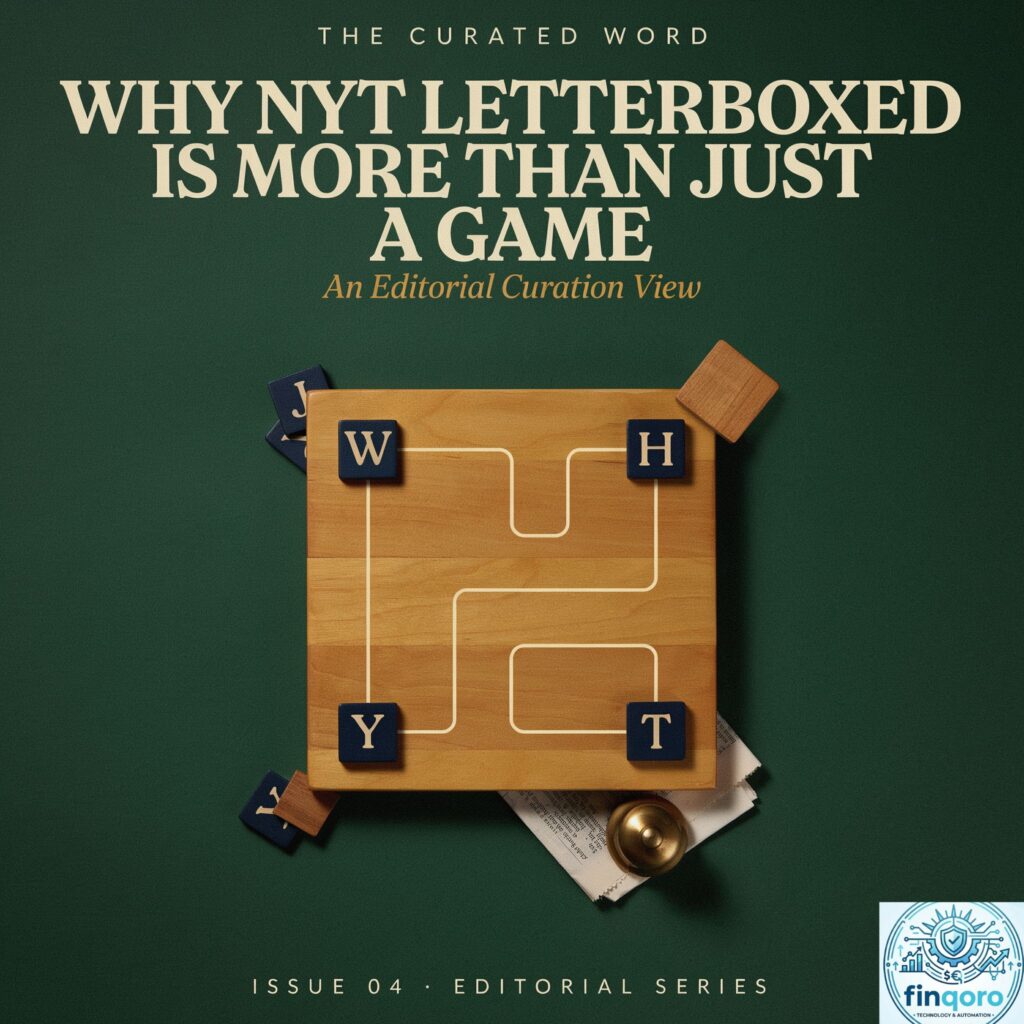
H2: LetterBoxed by NYT: More Than Just a Game – How It Frees Creativity
**LetterBoxed by NYT: More Than Just a Game – How It Frees Creativity** In this age of digital distractions, it can seem like searching for a needle in a haystack to discover a game that will test your mind and imagination. Such is the case with NYT LetterBoxed, a deceptively easy word puzzle on the minds of players everywhere. But what if we say it’s not only about finding words within those four walls? Come along as we explore this fantastic piece of editorial curation and see how it goes beyond gaming to offer a glimpse into language, strategy, and even storytelling. LetterBoxed is not only a pleasant diversion but also an immersive experience, with its carefully crafted clues and the community of players that breathe life into each round. It challenges you to think differently and interact with others through the beauty of words. Ready to open up new aspects in your gameplay? Here’s why you should play NYT LetterBoxed!
H2: NYT LetterBoxed Introduction
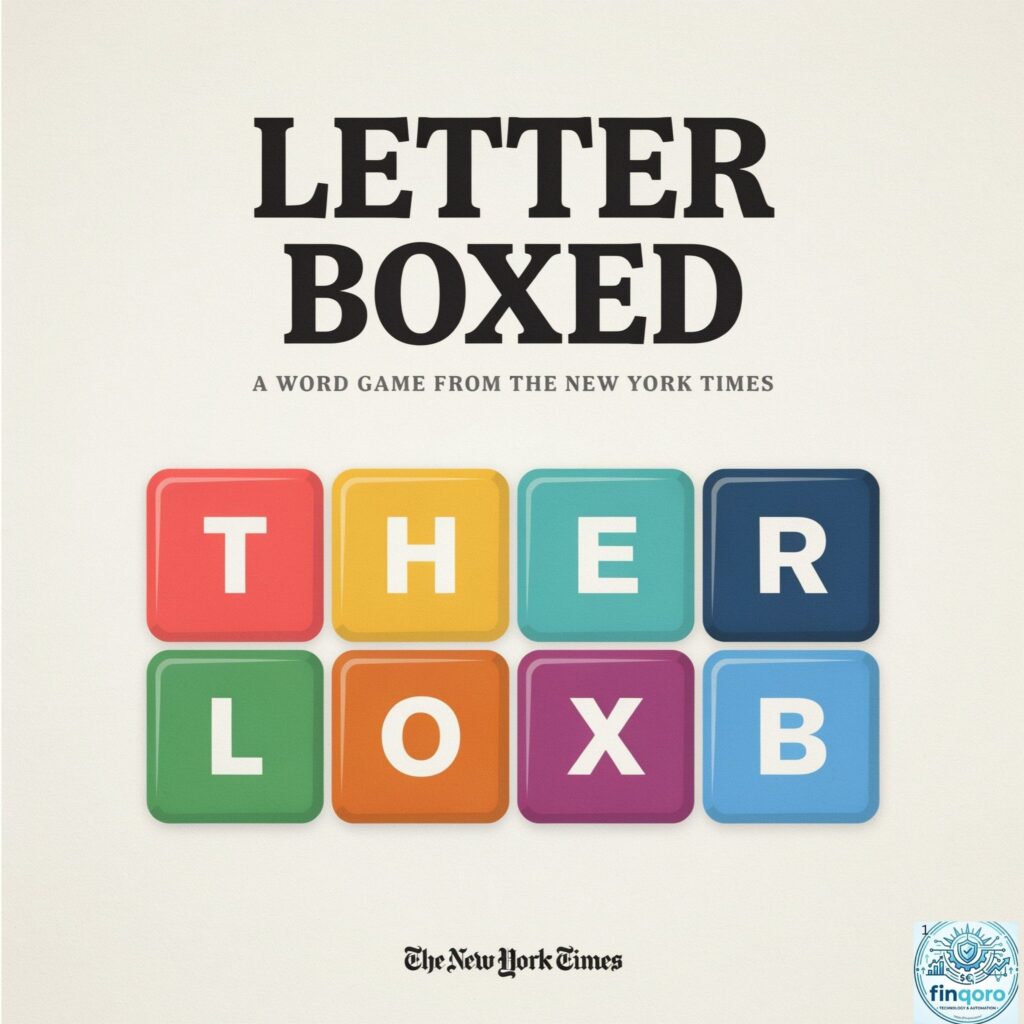
If you’re a fan of word games, chances are you’ve played NYT LetterBoxed. This brilliant game has become a worldwide phenomenon, attracting players everywhere with its unique blend of strategy and language. But this popular game is more than just putting words in a box. Behind each letter is a process, a well-oiled machine that is the art of editorial curation. <br/> NYT LetterBoxed <br/> Players who explore the difficulties of Letterboxed are not simply creating random combinations — they are working with curated information intended to challenge their minds and sharpen their games. Let’s see what makes NYT LetterBoxed a hit that surpasses the average puzzle: its fusion of gaming and journalistic expertise and how it defines its own space in today’s digital world.
H2: NYT Letter – The game and its popularity
It has a creative gameplay and design that draws players in, created by The New York Times.
The idea is simple, not easy. You take a bunch of letters from a box and make words. You have to use all the letters given, but there are a few rules, so you have to think creatively and strategically. The game is addictive, and players keep coming back for more, often starting friendly competition online. The everyday obstacles make things a little exciting. Things like every day is a new day.
Boxed is still growing its community as players discuss scores and strategies on social media. It’s a mix of brains and fun for seasoned wordsmiths and casual players alike who want brain-tickling enjoyment.
H2: The Idea of Editorial Curation
It has a creative gameplay and design that draws players in, created by The New York Times.
The idea is simple, not easy. You take a bunch of letters from a box and make words. You have to use all the letters given, but there are a few rules, so you have to think creatively and strategically. The game is addictive, and players keep coming back for more, often starting friendly competition online. The everyday obstacles make things a little exciting. Things like every day is a new day.
Boxed is still growing its community as players discuss scores and strategies on social media. It’s a mix of brains and fun for seasoned wordsmiths and casual players alike who want brain-tickling enjoyment. The Idea of Editorial Curation
Editorial curation is the craft of choosing and arranging content to offer value and context. In the information age, it plays an important role in helping the audience navigate large amounts of data.
This way, editors can sort through the endless options and choose only those that appeal to their audience. It’s about building relevance and developing engagement.
Editorial curation can influence media narratives. It affects which stories take off and how they are told. The picks are chosen for their zeitgeist or trending subjects.
Moreover, it gives credence to venues like NYT LetterBoxed. The words in there are the good ones, the tough ones, the ones you want to have a game with; players know that.
Editors offer a better user experience and the quality needed in the fast-paced world we live in today, with well-curated material. Definition and its importance in the media industry. Editorial curation is the process of selecting, organising, and presenting content in an engaging manner. In the age of information overload, it serves as a lighthouse for audiences. It helps to sift the noise and bring forward what is important.
This is a very important procedure in the media sector. Editorial teams are gatekeepers in a sea of competing narratives. They make sure that quality trumps quantity. Good curation builds trust between the content developer and user. Readers like to feel they can trust well-curated content — and their engagement increases as a result.
And the editorial shapes cultural discussions. Those selected phrases or stories will shape public opinion and spark conversations across many platforms.
Curators play an important role in shaping society’s values and priorities within the large media ecosystem by curating specific topics or themes.
H2: How Editorial Curation Works in NYT LetterBoxed

Editorial curation is key in the NYT LetterBoxed. Each game has its own collection of words, selected by the New York Times editorial board. This is not a random choice but a mirror of the potential and richness of language.
Editors seek to strike a compromise, using terms that are difficult for players but not impossible. They examine factors such as the length of the word, its frequency of use, and even its cultural relevance. The aim is to provide a thought-provoking, tactical, immersive experience. <br/><br/>
Moreover, the handpicked words are typically interesting to gamers. Many find themselves googling unknown terms and thinking about what they mean long after they’ve stopped playing. This interaction with words adds dimension to play beyond just playing the game.
With these judiciously selected choices, you find that the options they provide in each round of LetterBoxed become a tiny vocabulary journey. It takes a simple pun and makes a learning experience out of it, all in the manner of a classic puzzle. – How editors choose words for curating words for NYT LetterBoxed is a meticulous process. Editors comb through extensive databases, searching for words that are not only enjoyable but also inspire creativity in players and gamers.
It’s a mix of the familiar and the new when it comes to the choosing process. Words should be simple but interesting to create curiosity. Editors also take into account the length of the word and its possible combinations in the system of the game. There’s also a focus on linguistic variety. This way, players will face different themes and concepts as they play, making each challenge feel fresh.
Editors love comments from gamers, too. The results shed light on which words hit or miss and help inform future choices. Every list is a mixture of player desire and variety of words – a mixture that is necessary for a fun gaming experience in NYT Letter Boxed.
The Effect on Players
The influence of NYT LetterBoxed on players is far more than a delightful diversion. It makes you feel part of a community of word-lovers. Players happily post their plans and solutions online.
Many enjoy the challenge of curated words to test their vocabulary and inventiveness. Each round is like completing a riddle that just keeps them coming back for more. Some like the excitement of finding lesser-known terms alongside familiar favourites.
These phrases are quite deliberately chosen, and players often claim they improve the game. The mix of strategy and linguistic exploration makes for an immersive experience.
And certain conversations about certain words can spark curiosity about their derivations or usage in other settings. This relationship to language enhances not only playing but also daily conversations outside of the game.
H3: Player impressions on the handpicked words and gameplay experience
The words that LetterBoxed players encounter in the NYT are typically well-received. Many people find these choices to be an interesting challenge, forcing them to think imaginatively.
One gamer described how certain unusual terms piqued his interest and increased his vocabulary. The game is more than just leisure; it is a learning experience wrapped in fun.
Others consider the strategic aspect of word choice. Players are forced to make unlikely connections by curated lists, keeping each game fresh and intriguing.
And the dance of skill and luck keeps players coming back for more, eager to see what fresh combinations are in store.
There are also often community conversations about outstanding words or extremely tough problems. It builds fellowship among fans who respect both the game and its linguistic complexities.
H2: NYT LetterBoxed Editor: A Behind-the-Scenes Interview
NYT Letterboxed editors work hard behind the scenes to choose terms that will challenge and engage players. I had the opportunity to talk to one of these talented people.
They said that every chosen word is subject to a rigorous screening process. The goal is a mix of known names and more obscure ones, providing different gameplay experiences.
One interesting thing they said was that cultural trends influence their choices. You may include current events or famous phrases to make it feel fresh and topical.
But it’s not without its obstacles. One of the things editors have to battle with is the expectations of the player vs the creative. You have to be sharp and ready to adjust to strike this balance without losing the fun of the game. The curation is intentional and adds dimensions to NYT LetterBoxed, turning a simple game into an editorial statement of sorts that speaks to its readers in many ways.
H3: An understanding of the editors’ curation process and challenges
Curating is an art and science for the NYT LetterBoxed. Editors read over thousands of words, looking for the right mix between approachable and challenging. One big problem is ensuring the choices appeal to different types of players. Some like common words, others obscure words, to show their abilities. Finding that balance might be hard.
The editors also try to keep the gameplay fresh, regularly changing up word choices to avoid monotony and keep players engaged over time.
Feedback is also important; player comments generally tell us what is working and what isn’t. The editing team needs to constantly evaluate and be flexible in balancing these components. Another challenge for editors is to negotiate possible bias in word choice. Every option is important, and they have to consider cultural significance without alienating any player group.
H2: Editorial Curation in Games: Criticisms and Controversy

There are several critiques of the world of game editorial curation, such as those in the NYT Letterboxd. The selection method can be biased, and some players say it favours some themes or styles over others. That could create an unequal playing field.
And then there’s the matter of inclusiveness. Is every player portrayed well enough? The words you chose could be a narrow viewpoint not held by everyone.
Transparency is another issue of contention. Users frequently ask what criteria are used when selecting games and whether political or cultural biases are at play. This lack of transparency could breed cynicism among those seeking fair gaming experiences.
H3: thinking about what biases and limitations might be in the choice of words.
The NYT LetterBoxed is a fun game, but it has its detractors.
One of the main concerns is the potential bias in word selection. Editors have their own likes and dislikes and backgrounds that may unwittingly make their way into the edited words. This could mean a smaller vocabulary on display, sometimes leaving out players who are strong in diversity.
In addition, some cultural allusions may be missed or misrepresented. What works for one audience won’t be effective for another. Players may have favourites for word usage that are dictated by trends or pop culture, not an entire lexicon.
Over time, these constraints can affect the fun or difficulty of the game. A more robust approach could improve the player’s experience by offering a wider range of phrases tailored to each puzzle.
H2: Word Games: Alternatives to Editorial Curation
Understanding alternatives to editorial curation in word games can help you understand the range of options available. Some games rely on algorithms and user-generated content rather than curated lists. This can offer a wider range of words, but it may come at the cost of quality and coherence.
Some mobile apps even allow players to add their own words or phrases to make it more personal. This encourages creativity but can lead to confusion when esoteric ideas are introduced. Other games have community voting systems where players suggest and vote on new improvements.
These methods provide flexibility, but often lack the gloss of professional editorial scrutiny. They can both involve users and encourage them to become active content creators, but they are not necessarily conducive to a balanced gameplay experience.
Both have their pluses and minuses. Editorial curation is about a curated experience with a deliberate intent behind the selection, whereas algorithmic processes emphasise variety at the expense of profundity. As word games expand, the challenge for creators who want to engage the audience without sacrificing gameplay quality will be to find the right balance among these components.
H2: Conclusion (120 words)
NYT LetterBoxed stands as more than a simple word puzzle; it represents a thoughtful blend of language, strategy, and editorial design. The game shows how curated word selection can transform a basic activity into an engaging intellectual experience. Players are encouraged to think creatively, explore vocabulary, and connect ideas in new ways. Through its structured yet flexible gameplay, it highlights the importance of editorial curation in modern digital entertainment. Rather than relying on randomness, each puzzle reflects careful design choices that enhance learning and enjoyment. Ultimately, NYT LetterBoxed demonstrates how games can educate, challenge, and inspire simultaneously while maintaining simplicity and accessibility for all types of players worldwide today across digital platforms.
H2: Meta Description (120 words, keyword used 3 times)
Discover how NYT LetterBoxed goes beyond a simple word game and becomes a powerful example of editorial curation and language creativity. It explains how NYT LetterBoxed uses carefully selected words to challenge players and improve vocabulary skills in an engaging format. Many players see NYT LetterBoxed as more than entertainment, as it blends strategy, learning, and editorial decision-making in one experience. This article explores the puzzle deeply, focusing on how curated word choices shape gameplay, community discussion, and linguistic discovery overall. Readers gain insight into editorial processes, vocabulary design, and the evolving relationship between games and language learning experiences.
H2: FAQ
1. What is NYT LetterBoxed?
NYT LetterBoxed is a word puzzle game created by The New York Times where players connect letters around a box to form valid words while using all letters efficiently.
2. Why is the NYT LetterBoxed popular?
NYT LetterBoxed is popular because it combines simple rules with deep strategy, making it engaging for both casual players and serious word game enthusiasts.
3. How does editorial curation affect NYT LetterBoxed?
Editorial curation in NYT LetterBoxed ensures that words are carefully selected to balance difficulty, learning value, and gameplay enjoyment for users.
4. Is NYT LetterBoxed only a game?
No, NYT LetterBoxed is more than a game; it also helps improve vocabulary, encourages creative thinking, and reflects editorial design principles.
5. Can NYT LetterBoxed improve language skills?
Yes, regular engagement with NYT LetterBoxed can improve vocabulary, pattern recognition, and linguistic creativity through repeated exposure to curated word sets.